

From Lived Experience to Legislative Change: How Sunita Thapa is Turning Disability Rights into Reality in Nepal’s Gandaki Province and Beyond
News | August 17, 2026
She broke barriers as Nepal’s first hearing-impaired provincial legislator. Now she’s helping turn disability rights into lasting change and new opportunities for people with disabilities across the country.
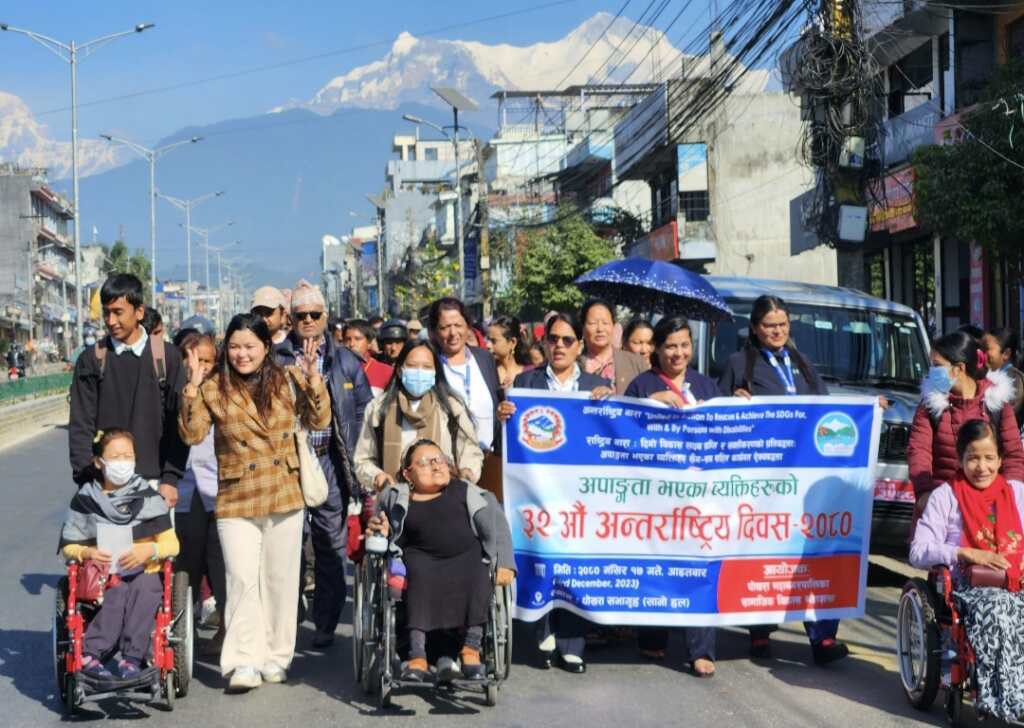 Sunita Thapa marches alongside people with disabilities and community advocates, raising awareness of disability rights and inclusion in Nepal.
Born in 1992 in a rural community more than 200 kilometres from Kathmandu, Sunita Thapa’s journey has been shaped by resilience and a deep commitment to inclusion. After losing her hearing at the age of 12, she encountered significant challenges in accessing education, communication, essential services, and equal opportunities as a deaf student in Nepal. These experiences inspired a lifelong commitment to ensuring that other people with disabilities would not have to face the same challenges alone. Through perseverance and hard work, she completed a Bachelor of Education degree. Her firsthand experience of exclusion and inequality would later become the driving force behind her advocacy and leadership.
Sunita became a dedicated disability rights advocate, championing the rights of people with disabilities, women, Indigenous communities, children and people living in rural and remote areas. Through her work, she saw how exclusion extended far beyond disability alone. Many people faced overlapping barriers such as poverty, geographic isolation and limited access to essential services.
Among the most pressing challenges she identified was the shortage of assistive technology and support services. For many people with disabilities in Nepal, obtaining a wheelchair, hearing aid, communication device or other assistive product can take months or even years. These delays are often compounded in rural communities, where services are scarce and costs can be prohibitive.
Sunita’s advocacy eventually led her into politics. After years of witnessing the barriers faced by people with disabilities, she realised that lasting change would require more than awareness and advocacy. It would require strong policies, legislation and leadership from within government.
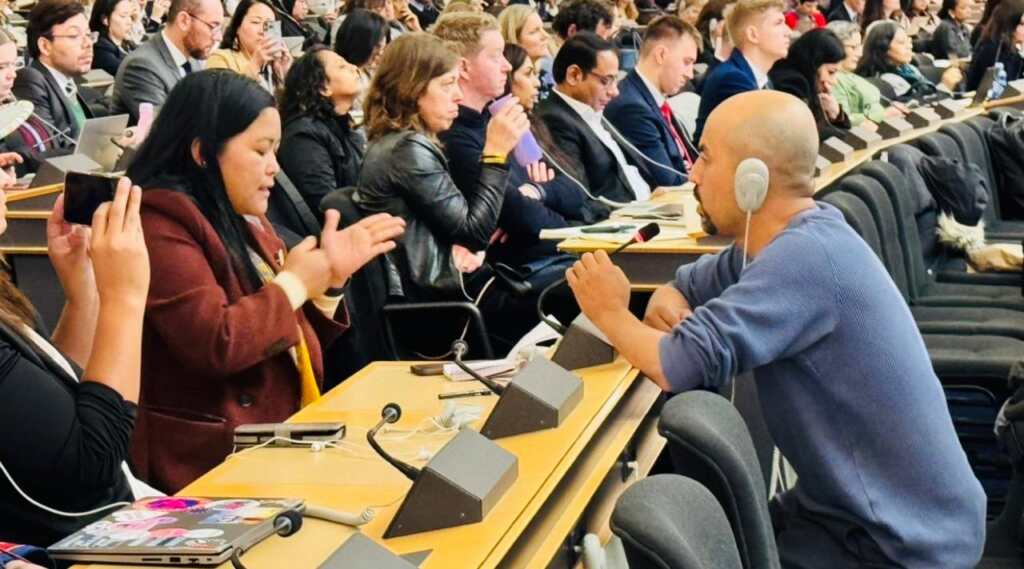 Sunita participates in an international disability rights forum, engaging in discussions on disability inclusion alongside advocates and policymakers.
Elected to the Gandaki Provincial Assembly by the Nepali Congress Party, Sunita made history as the first hearing-impaired person to serve as a provincial legislator in Nepal. While this was a landmark achievement, Sunita saw it as more than a personal milestone. It was an opportunity to take her lived experience beyond advocacy and into policymaking. As a member of the Assembly, she has used that perspective to advance meaningful legislation, strengthen representation, and create practical opportunities for persons with disabilities, particularly in underserved communities.
Her efforts contributed to Gandaki Province becoming the first province in Nepal to pass both a Provincial Disability Rights Act and its implementing regulations, proving how policy can help transform inclusion from an aspiration into action. The legislation is already creating momentum beyond Gandaki, with other provinces, including Madhesh, beginning to develop similar disability rights laws. What started as a provincial reform is now helping shape national conversations about disability inclusion, demonstrating how effective policy can be adapted, replicated and scaled across Nepal.
For Sunita, however, passing the law was never the finish line.
“The Disability Rights Act in Gandaki is not simply a piece of legislation. It represents the voices of people who have waited for recognition, dignity, accessibility, and equal opportunity. I believe that passing a law is only the beginning. Its true success will be measured by whether it reaches the person living in a remote village who needs a wheelchair, assistive technology, education, employment, or simply the opportunity to participate equally in society,” she said.
While the new law provides an important framework for recognising and protecting disability rights, the lack of dedicated government funding remains a major obstacle to turning those rights into reality.
To help bridge this gap, Sunita established the Suskera Foundation Nepal, an organisation dedicated to turning rights on paper into meaningful change in people’s lives. The Foundation focuses on inclusive education, healthcare access, community empowerment, training and capacity building, advocacy, and disability-inclusive disaster preparedness and response. Working with organisations of persons with disabilities, government agencies and development partners, the Foundation seeks to ensure disability inclusion reaches communities that are too often left behind.
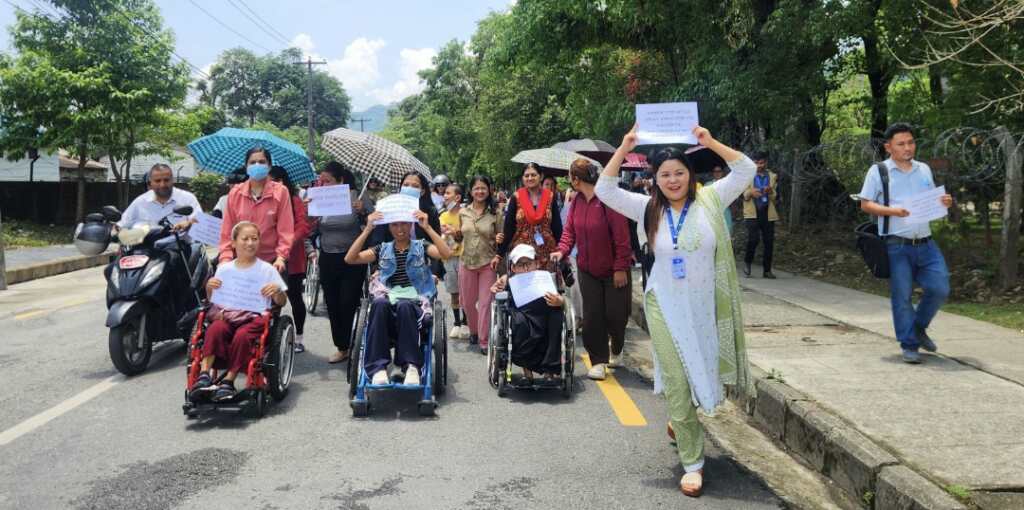 Sunita leads a disability rights march along a street in Nepal, holding a sign above her head while walking alongside people with disabilities.
Today, Sunita’s focus is firmly on implementation. Her concern is not only disability, but the multiple barriers many people face, including poverty, geographic isolation and limited access to services. She is particularly passionate about ensuring that people with disabilities living in hard-to-reach communities have the same opportunities as those living in urban centres.
“Disability rights are not simply about changing laws; they are about changing lives. I have experienced barriers firsthand, and that experience has given me a responsibility to help remove those barriers for others. I want to turn rights written on paper into real opportunities so that no person with a disability is left behind because of poverty, geography, or lack of access,” Sunita added.
As Gandaki’s disability rights reforms gain attention across Nepal, Sunita hopes the province’s experience will inspire broader change and encourage other provinces to follow suit. Through her leadership, she is helping demonstrate how lived experience, strong partnerships, and inclusive policymaking can create lasting change.
“My greatest hope is that the work we are doing in Gandaki will become a model that others can follow, and that one day every person with a disability in Nepal will have the opportunity to live with dignity, participate equally, and realise their full potential.”
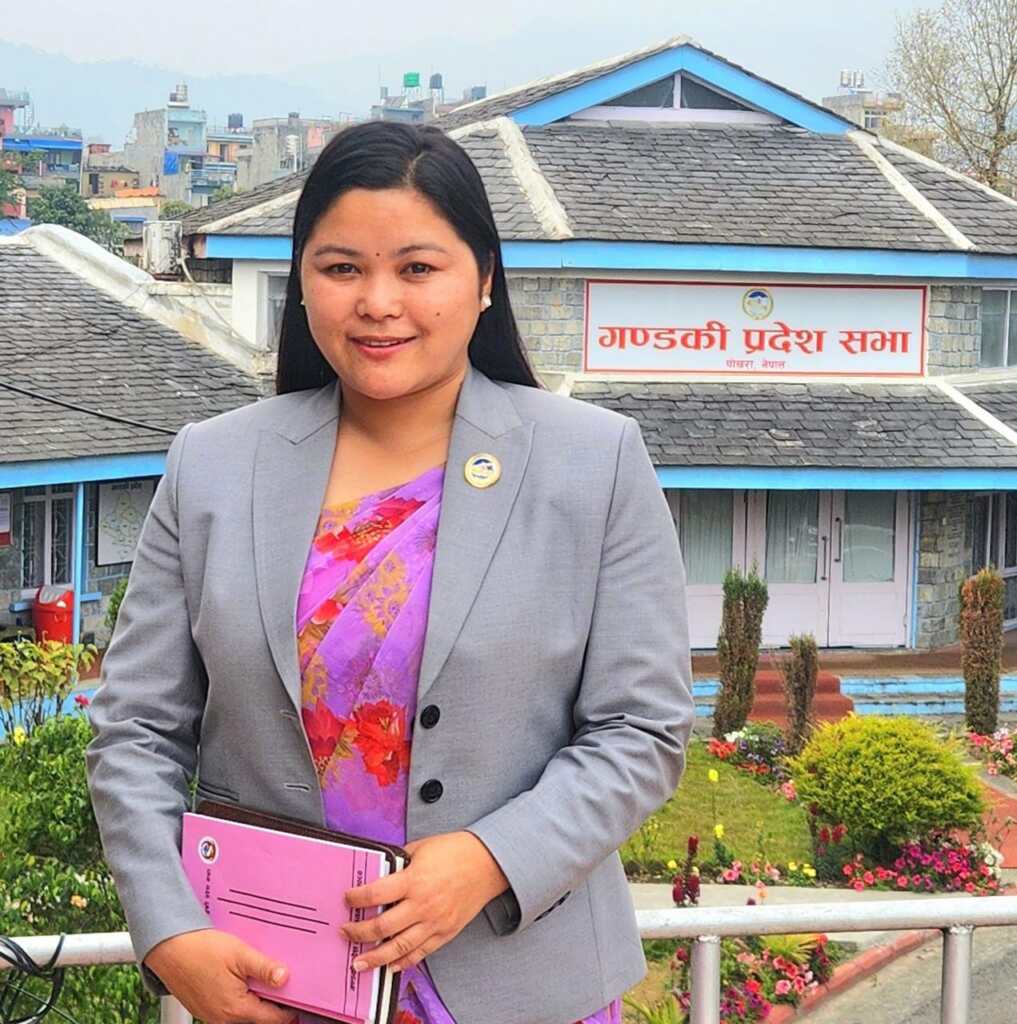 Sunita outside the Gandaki Provincial Assembly in Pokhara, Nepal, where she has championed disability rights legislation and inclusive policymaking.
https://www.addc.org.au/news/sunitathapa
Related Stories
In Conversation with Carmen Reyes-Zubiaga: Building a National Movement of Women with Disabilities Leaders
Editor's note: This interview was conducted in Taglish (a...
Matt Levy on assistive technology, Paralympics and winning gold
As an Australian Paralympian, I’ve experienced firsthand the profound impact that assistive devices can...