

In Conversation with Carmen Reyes-Zubiaga: Building a National Movement of Women with Disabilities Leaders
News | September 28, 2026
Editor’s note: This interview was conducted in Taglish (a mix of Tagalog and English) and has been edited and translated into English for clarity and length.
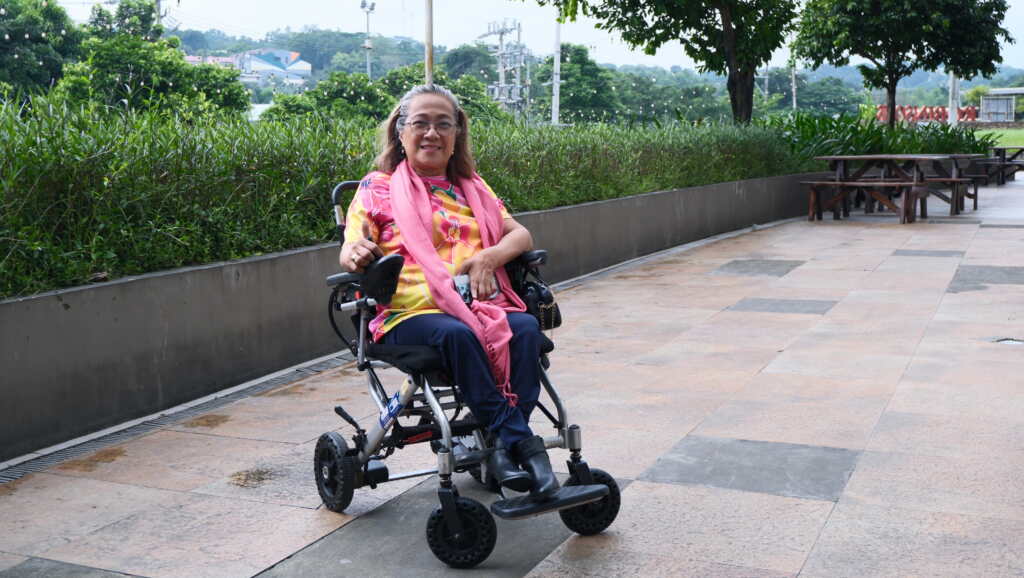
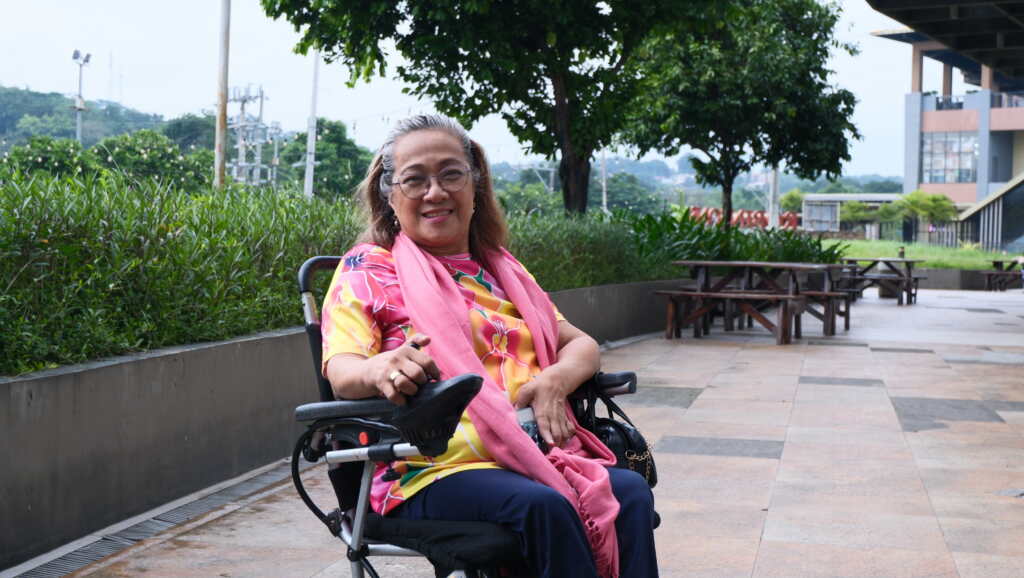
WOWLEAP President Carmen Reyes-Zubiaga on an outdoor terrace wearing a colourful top and pink scarf.
In August 2026, ADDC Communications Officer Melinda Gabuya travelled to the Philippines and met with leaders of organisations of persons with disabilities (OPDs) supported by CBM Global Philippines. As part of this visit, Melinda sat down with Carmen Reyes-Zubiaga, Founding President of WOWLEAP (Women with Disabilities Leap for Social and Economic Progress), to discuss the organisation’s journey, the leadership of women with disabilities in the Philippines, and the importance of disability-inclusive development.
After returning from Cambodia in 2000, Carmen met women whose lives had been shaped by discrimination and exclusion. Listening to their stories inspired the creation of WOWLEAP. More than two decades later, many of those women and the women who followed in their footsteps have become leaders in their own right, establishing organisations, advocating with governments, representing the Philippines internationally, and mentoring other women with disabilities.
Founded by women with disabilities, WOWLEAP has grown from a small group of advocates into a nationwide organisation with affiliates across the Philippines. Through leadership development, livelihoods training, advocacy and partnership-building, WOWLEAP has supported women with disabilities to become community leaders, entrepreneurs and champions for disability rights.
In this interview, Carmen reflects on the stories that inspired WOWLEAP, the milestones that shaped its growth, and her vision for the future.
Q: What inspired the creation of WOWLEAP?
Carmen Zubiaga:
After returning to the Philippines in 2000 from an assignment with the United Nations Volunteers (UNV) programme in Cambodia, I worked on a project with Tahanan Walang Hagdan, an organisation that provides skills development and employment opportunities for persons with disabilities.
There, I met many women with disabilities and listened to their stories. While I had the opportunity to study, work and travel, many had been denied education and opportunities because of assumptions about what women with disabilities could achieve.
One woman shared that she was never sent to school because her family believed she would simply get married and depend on others. As women shared their experiences, we realised we wanted to create more opportunities for women with disabilities. Those conversations became the foundation of WOWLEAP.
“While I had the opportunity to study, work and travel, many women with disabilities were denied those same opportunities simply because of assumptions about what they could achieve.”
Q: What are some milestones that stand out in WOWLEAP’s journey?
Carmen Zubiaga:
A major milestone was securing support from the Global Fund for Women in 2004. At the time, there were very few initiatives focused on women with disabilities, so we proposed a project on leadership and membership development.
Through that project, we trained around 150 women with disabilities from across the Philippines. Many later became leaders of WOWLEAP affiliates or established organisations in their own communities. Today, WOWLEAP has a presence in every region of the Philippines.
“The women we trained became leaders themselves, creating opportunities for other women with disabilities across the Philippines.”
Over the years, we have also built partnerships with government agencies and international organisations to expand leadership, livelihood and skills development opportunities for women with disabilities.
Another important milestone has been seeing WOWLEAP members represent the Philippines at international events and exchanges in countries such as China and South Korea, opportunities many never imagined they would have.
Q: What impact has WOWLEAP had on women with disabilities and their communities?
Carmen Zubiaga:
One of WOWLEAP’s greatest achievements has been helping women with disabilities transform into leaders in their own communities. When we started, there was very little attention on the issues faced by women with disabilities, particularly within government. Today, many women are speaking up, advocating for their rights and leading organisations of their own.
“Through leadership development and capacity building, we wanted women with disabilities to stand on their own and become leaders in their own right.”
From the beginning, our goal was never for women to remain dependent on WOWLEAP. Through leadership development, capacity building and mentorship, we wanted women to stand on their own, build their own organisations and become leaders in their own right.
We’ve seen this transformation across the country. In Cebu, women trained through WOWLEAP went on to organise disability groups across four cities and establish a cross-disability organisation for women with disabilities. In Cotabato, women with disabilities successfully advocated for the establishment of a PWD Centre in their community.
More recently, partnerships such as our work with CBM Global have helped strengthen the leadership and participation of grassroots OPDs. Through training on disability rights and inclusive governance, women with disabilities have gained greater confidence to speak up, organise in their communities and take on leadership roles. The establishment of a women with disabilities network has been particularly important in creating opportunities for women to lead and support one another.
We were once a struggling OPD ourselves, and we want other organisations to achieve what we have achieved. For us, true impact is seeing women create opportunities not only for themselves but for other women with disabilities in their communities.
Q: What are you most proud of?
Carmen Zubiaga:
I am most proud of seeing women succeed on their own. When we first met some of them, they could barely speak to local officials or even make eye contact. Through leadership and personal development training, they gained confidence and became effective advocates in their communities.
We always encourage women to think about their own vision for the future, not just the vision of their organisation. We want them to succeed as individuals, leaders, family members and community members.
What makes me happiest is knowing that the impact of our work lasts long after the training ends.
“The impact of our work is not just in the training itself. It stays with women and continues to shape their lives long afterwards.”
Q: Where do you hope to see WOWLEAP in five years?
Carmen Zubiaga:
I would like to see learning hubs established across every region of the Philippines so that women with disabilities can continue building their skills and leadership.
I am also excited to see more young women with disabilities taking on leadership roles. We need to prepare the next generation and ensure leadership opportunities are shared more widely.
Ultimately, I hope our network continues to grow stronger so that local leaders have the support, skills and resources they need to create change in their communities.
Q: What message would you like to share with policymakers and donors?
Carmen Zubiaga:
Women and persons with disabilities must be represented in local, regional and national decision-making bodies. If we are not at the table, our voices cannot be heard.
No one can represent persons with disabilities better than persons with disabilities themselves.
“No one can represent persons with disabilities better than persons with disabilities themselves.”
Q: What does disability inclusion mean to you?
Carmen Zubiaga:
For me, disability inclusion is not just about being present. We must be capacitated to understand your language, and you must be capacitated to understand ours.
It is about listening to each other’s experiences and learning from one another. Our lived experiences are important references for developing responsive programs, services and policies. How can you design something for persons with disabilities if the people who will use it were not involved in shaping it?
Persons with disabilities must not only be included, but they must also be heard and recognised as partners in decision-making.
“We must be capacitated to understand your language, and you must be capacitated to understand ours.”
https://www.addc.org.au/news/wowleap
Related Stories
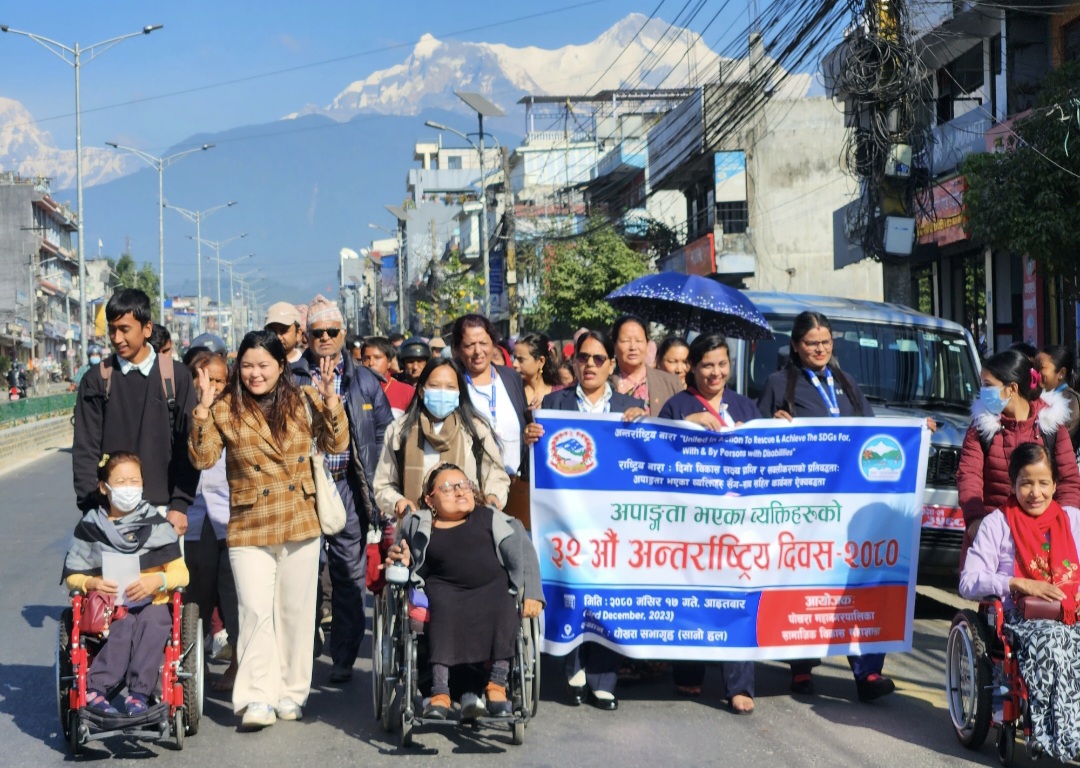
From Lived Experience to Legislative Change: How Sunita Thapa is Turning Disability Rights into Reality in Nepal’s Gandaki Province and Beyond
She broke barriers as Nepal's first hearing-impaired provincial legislator....
Matt Levy on assistive technology, Paralympics and winning gold
As an Australian Paralympian, I’ve experienced firsthand the profound impact that assistive devices can...